








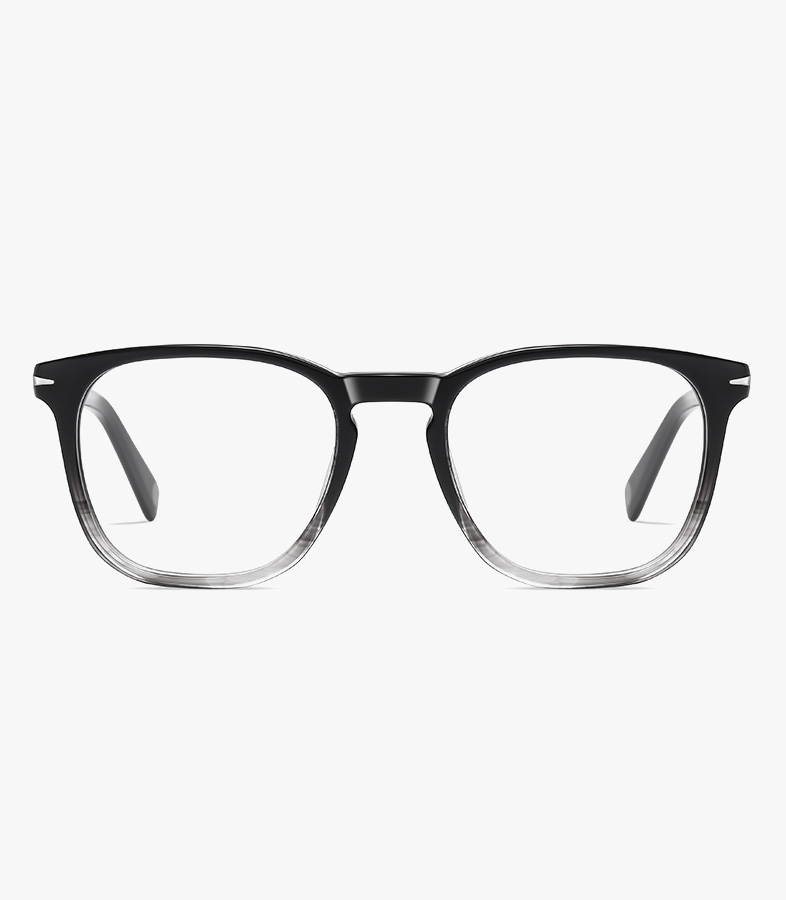






You’ve probably noticed it by now—holding menus at arm’s length, squinting at your phone, or giving up on small print altogether. Welcome to presbyopia.
Once you decide to do something about it, you’ll run into two main options: bifocals and progressive lenses. They sound similar, but they work very differently. Let’s break it down so you know which one fits your life.

What are bifocals?
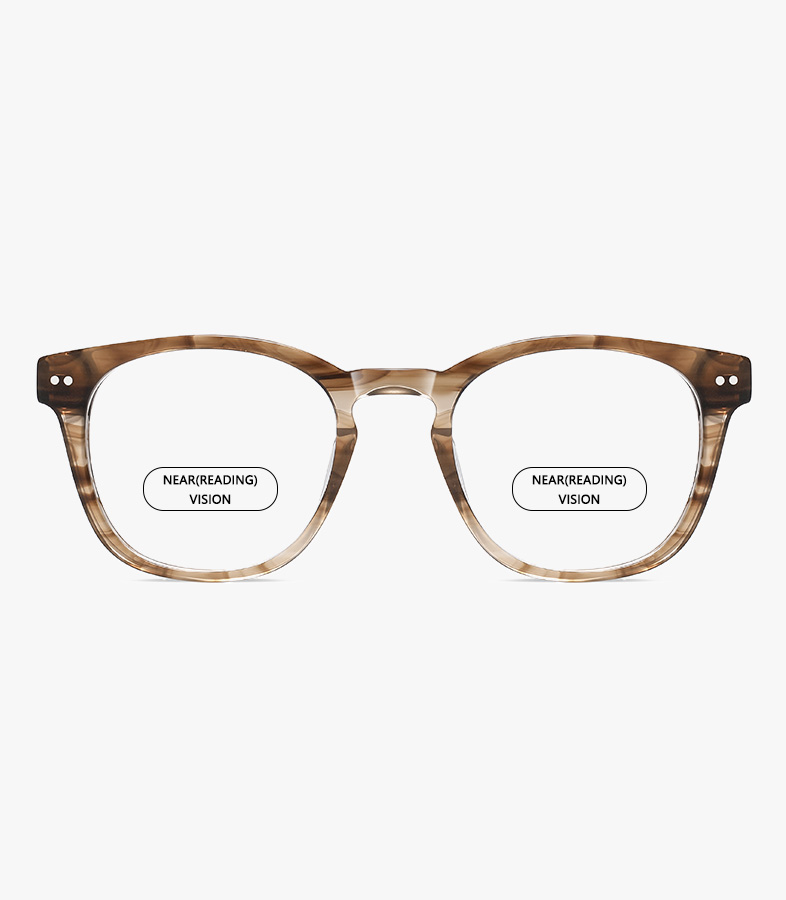
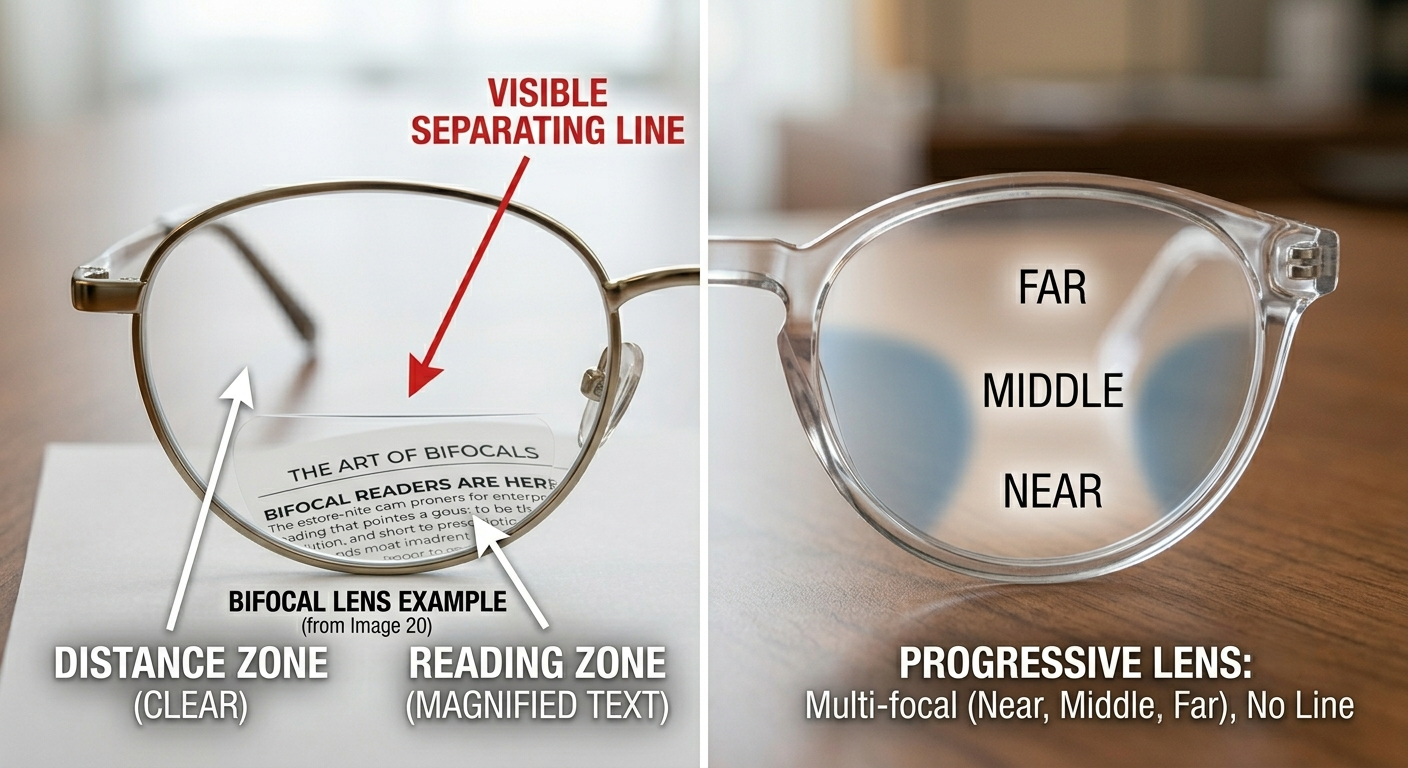
Bifocals have two distinct zones in one lens. The top part is for distance—looking across the room or driving. The bottom part is for reading up close. There’s a visible line separating them.
That line used to be a design staple. Some people don’t mind it. Others find it distracting.
What are progressive lenses?
Progressives do the same job without the line. The power changes gradually from the top of the lens to the bottom. So you get distance, middle (computer distance), and near vision all in one smooth transition. No visible jump.
They look just like regular single‑vision glasses. No one can tell you’re wearing “reading glasses” at all.
The pros and cons at a glance
Bifocals are usually cheaper, and they give you a nice wide reading area at the bottom. They’re also easy to find and fit. But that visible line can be distracting. There’s no mid‑distance zone, so computer work gets awkward. And when your eye crosses the line, objects can seem to jump.
Progressives have no line at all—they just look like normal glasses. Once you adapt, you get smooth vision at near, middle, and far distances. The trade‑off is that they take a few days to get used to (some people notice a little distortion at the edges at first). They also cost more than bifocals and need precise measurements for a good fit.
Which one is right for you?
Choose bifocals if:
- You’re on a tighter budget
- You don’t spend much time on computers or middle‑distance tasks
- You’ve worn bifocals before and like the simplicity
- You don’t mind the visible line
Choose progressives if:
- You want your glasses to look like normal glasses
- You work at a computer AND read AND look across the room regularly
- You’re willing to give your eyes a week to adjust
- You prefer seamless, modern lens design

Do progressives work for everyone?
Most people adapt within a few days. A small number of people never quite get comfortable with them—usually if the fit is off or the prescription is very complex. That’s why getting progressives from a trusted optician (or a quality online store like EyeCedar) matters. Badly made progressives are a headache. Good ones feel natural.
What about computer use?
If you spend hours at a desk, bifocals can be frustrating. The reading zone is for books—too low for a monitor. You end up tilting your head back awkwardly.
Progressives have that middle zone built in. Look straight ahead at your screen, slightly down for your keyboard, and up for across the room. No head tilting. No neck pain.

Still not sure?
Ask yourself one question: do you want people to see a line on your glasses? If you don’t care, bifocals will save you money. If you’d rather keep things clean and modern, go with progressives.
Both will help you see clearly again. One just does it with a little more style and a little less fuss.