














So you heard there is a solar eclipse coming. Everyone is talking about it. Your neighbor bought ten pairs of eclipse glasses. Your cousin is driving four hours to get into the path of totality. And you? You forgot to order any.
No worries. You can make your own eclipse glasses at home. But here is the thing. You have to do it safely. Looking at the sun even for a few seconds without proper protection can permanently damage your eyes. So let me show you how to build a pair that actually works, and a few tricks that definitely do not.
First, What Not to Do
Before we get into the fun stuff, let me clear up some dangerous myths.
- Regular sunglasses – Not even close. They block maybe 10% of sunlight. You need 99.99% blockage.
- Smoked glass – Old trick from grandpa, but it is not safe. Cracks and uneven coating let through harmful rays.
- CD or DVD – Nope. Those shiny discs do not block enough UV or infrared light.
- Camera film – Unless it is completely exposed and developed black, forget it.
- Potato chip bag – I have seen people try this. Do not.
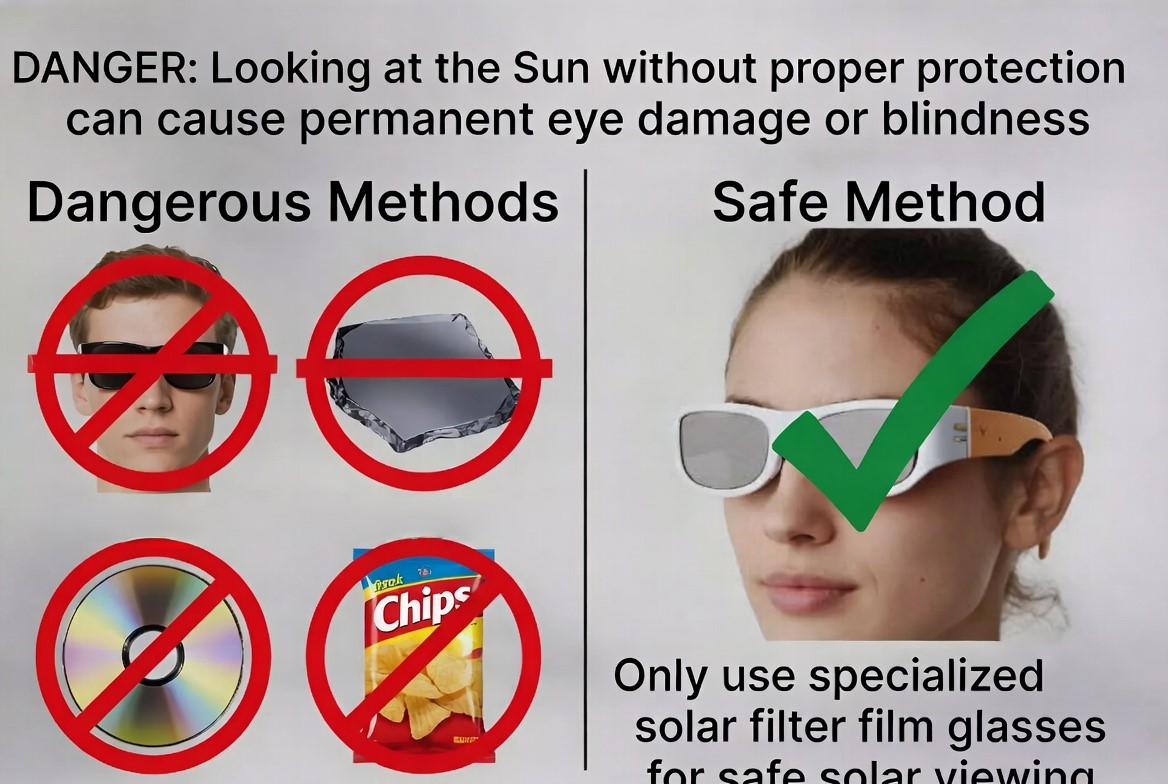
Seriously. Do not mess around with your eyes. The damage from looking at the sun is painless and permanent. You will not feel it happening. You will just wake up one day with a blurry spot in your vision that never goes away.
So let us do this the right way.
The Only Safe DIY Method
You need a special material called solar filter sheet or solar viewing film. It looks like a thin, silvery foil. You can buy it online from reputable astronomy stores. Do not buy it from a random seller on a marketplace. Get it from a trusted brand like Thousand Oaks Optical or Baader Planetarium.
One small sheet costs about fifteen to twenty dollars and can make several pairs of glasses.
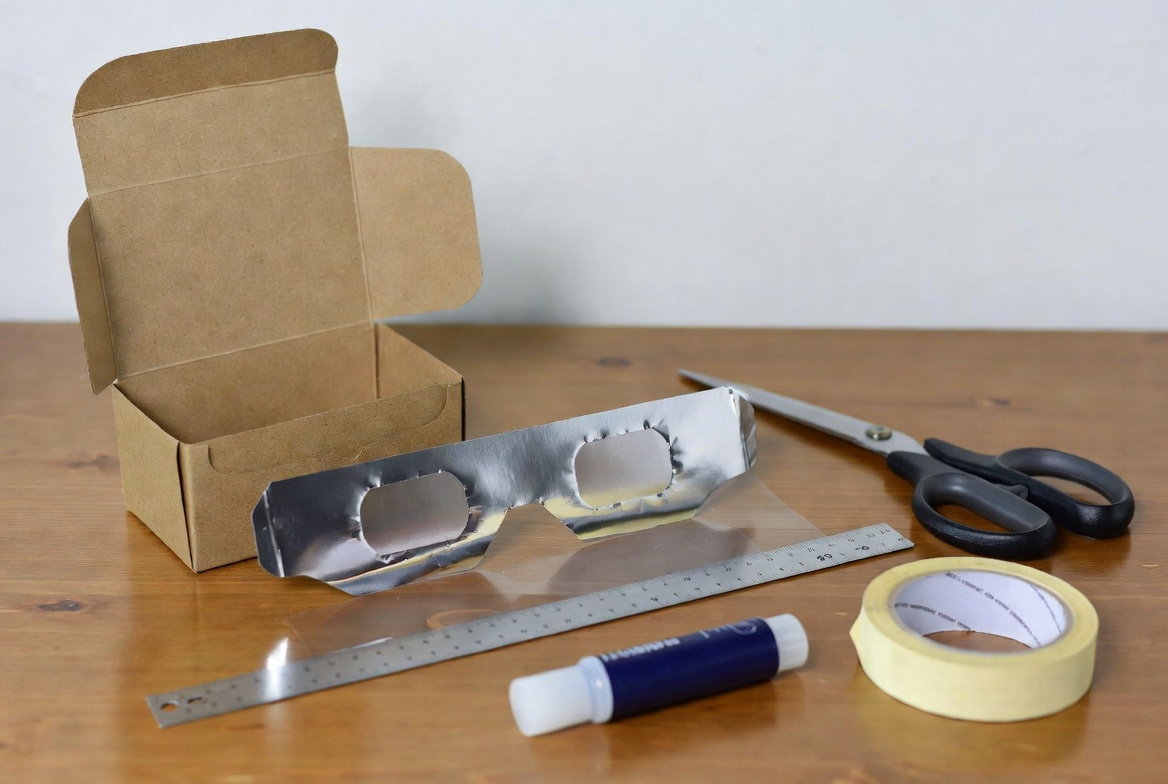
What You Will Need
- Solar filter film
- Thick cardboard (a cereal box works great)
- Scissors, glue or tape, ruler
How to Make Them
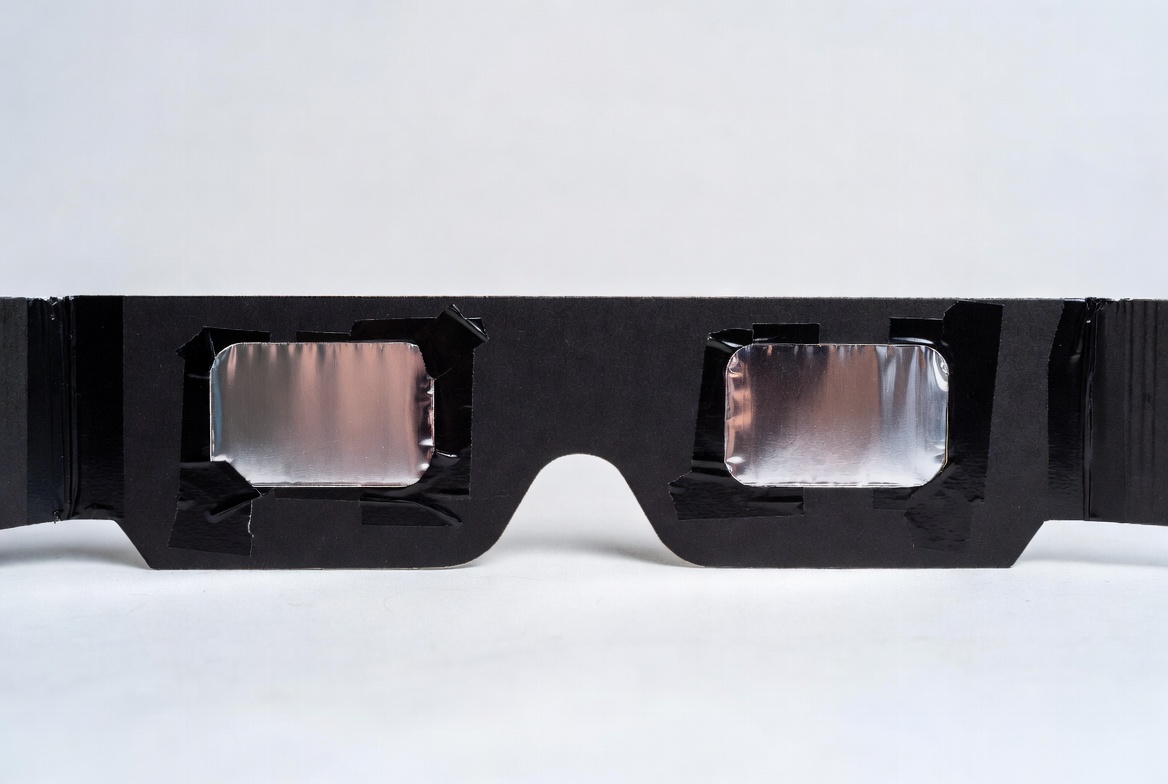
Cut a piece of cardboard into the shape of glasses – two eye holes connected by a bridge, plus arms. Any rough shape works. Then cut out the eye openings, about an inch wide.
Cut two pieces of solar film slightly larger than the holes. Tape or glue them over the holes from the front. Make sure the film is smooth, flat, and has no tears or pinholes. Seal the edges with dark tape to block stray light.
For the arms, tape two long cardboard strips to the sides and bend them to hook over your ears.
Test your glasses indoors. Look at a bright light bulb. You should see almost nothing – just a very dim glow. If you see any bright spots or cracks, throw them away and make a new pair.
How to Use Them During the Eclipse
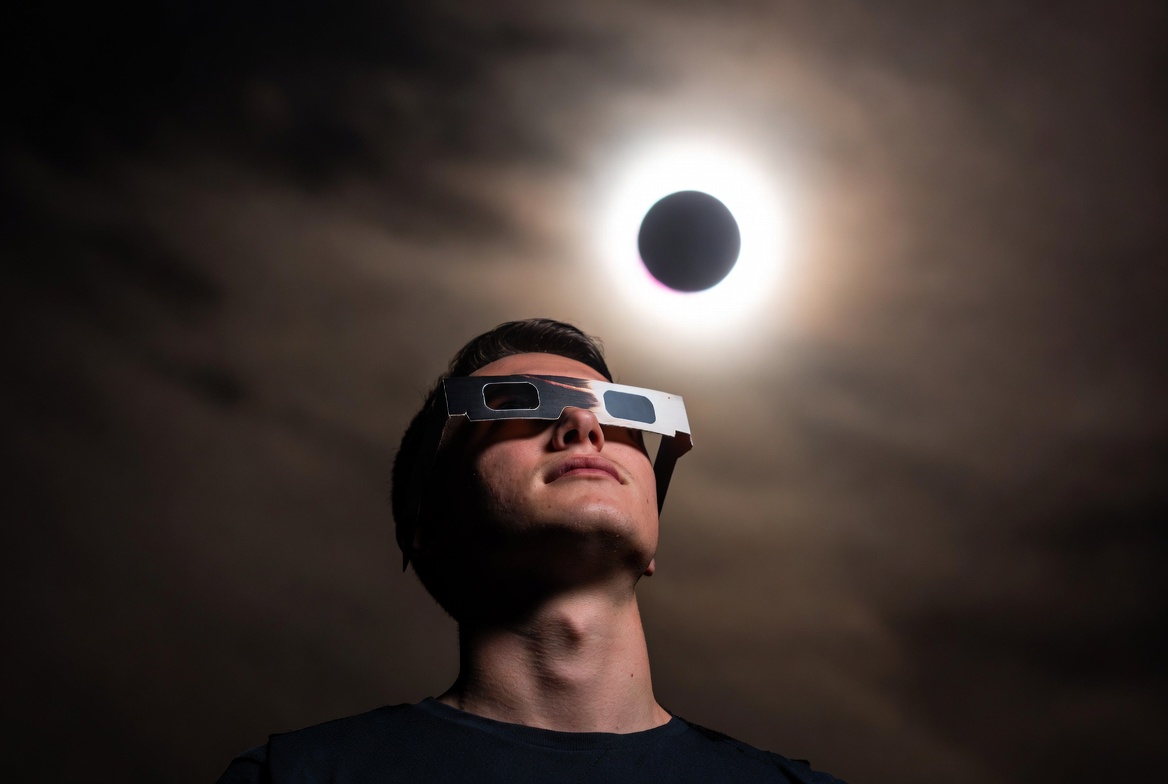
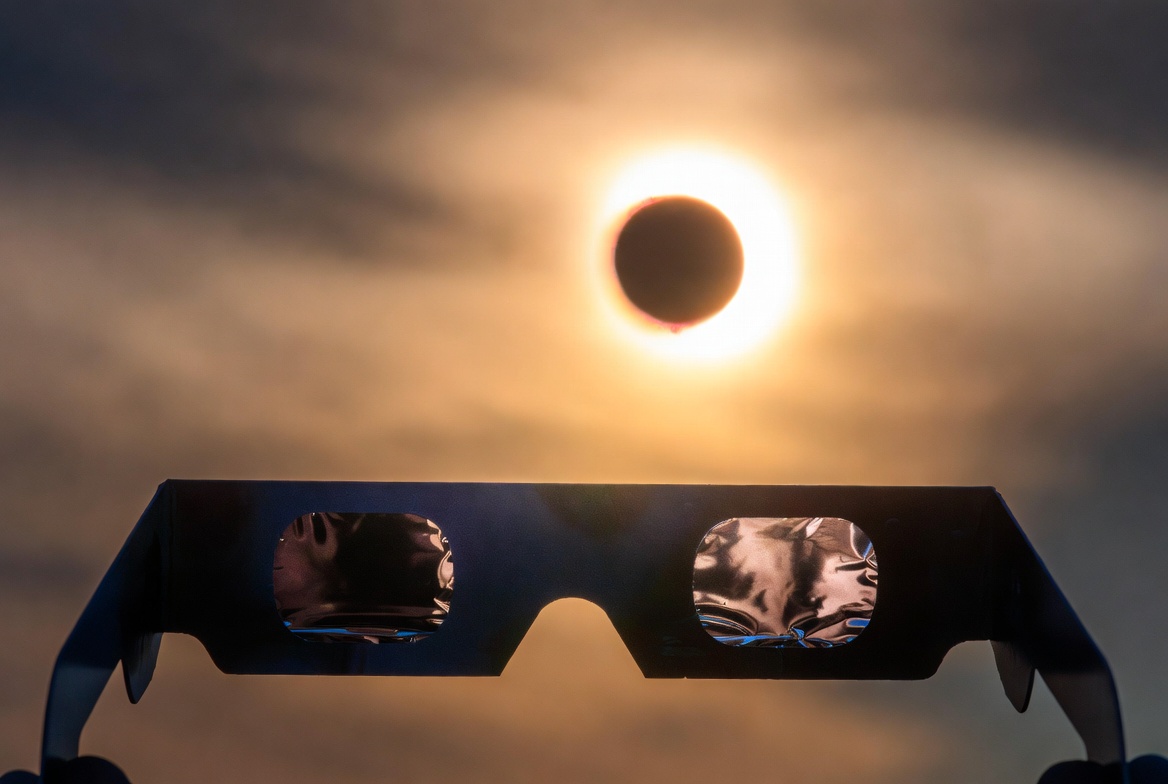
Put the glasses on before you look up. Look at the sun for no more than 30 seconds at a time. Do not use them if they get scratched or bent. And remember – during totality (when the moon fully covers the sun), you can take them off. But put them back on as soon as the sun starts reappearing.
What If You Cannot Make Your Own?
- Buy certified eclipse glasses with ISO 12312‑2 on the package.
- Use a welder's filter of shade 12, 13, or 14.
- Make a pinhole projector – poke a small hole in one piece of cardboard, let sunlight fall onto another piece. No glasses needed.
Eye damage from solar viewing is real. It happens every eclipse. Do not be the person who takes a "quick peek" and ends up with a permanent blind spot. Make your glasses carefully, test them, and enjoy the show safely.